
"coffee tree growth"
6000 article(s) found

Which brand of organic coffee is good? the reason for choosing organic coffee beans? is organic coffee beans expensive?
Professional coffee knowledge exchange more coffee bean information Please follow the coffee workshop (Wechat official account cafe_style) about organic coffee beans in many parts of the world, growers use pesticides to control the growth of coffee pests, and moist and foggy coffee at high altitudes are often more vulnerable to pests, so growers often use insecticide treatments. Many people think that as long as coffee is not used during the growth period,

Introduction to the characteristic flavor of four forms of Ethiopian coffee beans grown and produced in Ethiopia coffee
Growth and production patterns: there are four growth production patterns in Ethiopia, and 95% of coffee is produced from these types or systems. 1. Forest grows in southern and southwestern Ethiopia, mostly wild or under natural forests. It provides natural shade for coffee trees, but the resistance is slightly weak. This production system accounts for about

Production conditions of Coffee trees Shijiazhuang Cafe
Fertilization was carried out in combination with plastic surgery within 1-2 days after planting. The fertilization of young coffee trees is mainly nitrogen fertilizer, while appropriate application of phosphorus and potassium fertilizer, in order to accelerate the formation of crown and promote the development of roots. Human and animal manure and green leaf retting fertilizer also have a good effect on the growth of young coffee trees. Coffee seedlings can be fertilized for the first time two months after planting, and then once every 1-2 months. Such as human and animal dung

The ideal growing environment for coffee trees the common sense of coffee tree planting coffee tree varieties and regional factors
Professional coffee knowledge exchange more coffee bean information Please pay attention to coffee workshop (Wechat official account cafe_style) Coffee trees grow in the tropics between Tropic of Cancer and Tropic of Cancer and near the equator, also known as the world coffee growth belt, caffeine varieties and regional factors, there are also great differences in appearance. Evergreen leaves from yellowish green to dark green or

Conditions for growing coffee trees
Coffee cannot be grown in any environment, because it is originally a tropical rainforest plant, and in the development of the system, it develops habits that require calm wind, warm, shade or semi-shade and humid environments. We call the strip of area on both sides of the equator, between 25 degrees north and south latitude, suitable for the growth of coffee trees coffee belt.

Why do Ethiopian coffee beans have good quality? what conditions do high-quality coffee beans need?
The planting and growth of coffee trees need strict environmental requirements. Climate, altitude, soil, as well as the way coffee beans are picked and the process of production will affect the quality of coffee. First, the elevation of Ethiopia is mainly mountain plateau, most of which belong to the Ethiopian plateau. The central and western regions are the main body of the plateau, accounting for 2% of the whole territory. 3. The East African Rift Valley runs through the whole territory, with an average elevation.

Planting conditions and Regional Distribution of Coffee trees species of Coffee trees planting altitude
Professional coffee knowledge exchange more coffee bean information Please pay attention to the coffee workshop (Wechat official account cafe_style) Coffee planting and geographical distribution climate is the decisive factor in coffee cultivation, coffee trees are only suitable for growing in the tropics or subtropics, so the zone between 25 degrees south and north latitude is generally called coffee belt or coffee area. However, not all the land located in this area

Introduction of Coffee Encyclopedia on Plant growth of Coffee
The coffee tree is an evergreen tree with small white flowers and green fruit that does not turn red until it is ripe. A normal coffee tree can usually grow to a height of 5 to 10 meters, but bean farmers often prune it to less than 2 meters for harvest convenience. After flowering, there are many dark green oval fruits, and the mature fruits change from dark green to bright red, due to the color and cherry.

Planting knowledge of Coffee trees guided by cultivation techniques of small Coffee
Small-grain coffee is a shrub of Rubiaceae, which is suitable for planting in areas with an annual average temperature of 19 ℃ ~ 21 ℃ and an altitude of 800-1400m. It has the advantages of fast plant growth, early fruit and high yield. The land preparation should choose the contour platform with deep soil layer, loose and fertile soil, clean wind, sufficient light and shade trees, annual rainfall of 700 to 1600 mm, slope of less than 30 degrees, and row spacing of 2 to 3 meters.

Introduction of raw and ripe beans in the process of coffee bean germination, growth and baking
According to an Arab legend, around 1250, the exiled chief Omar discovered exuberant wild coffee berries. The hungry and tired sheikh boiled some of the fruit in water and drank the brewed coffee pulp. He liked the change in his diet very much and gave the drink to some people who had just recovered from a serious illness. Chief Omar.

The growth process of Coffee Coffee basic knowledge
First, planting time: April 15-25 period. Second, planting location: plain, hillside, wasteland, front and back house, forest and fruit tree seedlings can be planted, but should not be planted in tall trees or other unventilated places. Third, herbal coffee does not like flood and fertilizer, conditional planting can use farm manure, during the growth period, it is best to irrigate 1-2 water during the growth period, absolutely do not allow the use of all kinds of chemical fertilizers and

The growth process of coffee beans in the place where coffee grows
Finally, I have an opportunity to witness the formation of coffee. The coffee comes from Ethiopian coffee after visiting MONTENEGRO National Coffee Park in QUINDIO Province, Colombia, and a garden coffee farm in MANIZALES, CALDAS Province. In Colombia, it was taken from the French Antilles by a priest in 1808.
Basic knowledge of coffee conditions for planting coffee trees
Coffee belt: coffee can not be grown in any environment, because it is originally a plant growing in a tropical rain forest, and in phylogeny, it forms the habit of requiring calm wind, cool, shaded or semi-shaded and humid environment. We call the strips on both sides of the equator between latitudes 25 degrees south and north suitable for the growth of coffee trees as coffee belts. Temperature: the requirement for temperature varies with the species of cultivation, small

Introduction to the requirements of natural conditions in the growth process of wild coffee
Introduction to the requirements of natural conditions in the growth process of wild coffee in fact, the Arabs began to grow coffee in 525 BC, and chewing fried coffee beans became popular in the Arab region. In 890 AD, Arab merchants sold coffee beans to Yemen, and Yemenis made coffee beans into drinks for the first time. In the 15th century, coffee was introduced into Europe and Asia, and soon into the United States.

The process of picking from Coffee Tree to Coffee Fruit and beans
Coffee Tree introduction in fact, the Arabs began to grow coffee in 525 BC, and chewing fried coffee beans became popular in the Arab region. In 890 AD, Arab merchants sold coffee beans to Yemen, and Yemenis made coffee beans into drinks for the first time. In the 15th century, coffee was introduced into Europe, Asia and soon into America. By the 18th century, the global tropics and subfever

Colombia Coffee Bean Flavor Description Grind Scale Variety Area of Origin Treatment Manor Introduction
Colombia coffee beans Colombia many areas between 1200 meters to 1800 meters above sea level, annual rainfall of about 2000 mm, adequate sunshine and rainfall is very suitable for coffee growth. But in recent years Jos Ramón Corazos, who lives in the southern province of Huila, has found that his plantations are producing less coffee, the most important factor being global climate change. rain

What kind of environment is most suitable for planting coffee trees?
The planting conditions of coffee trees, however, not all the land located in this area can produce good coffee trees. The ideal planting conditions of coffee trees are as follows: the temperature is between 15 ℃ and 25 ℃, and the annual rainfall must reach 1500 mm to 2000 mm. At the same time, the rainfall time should be in line with the flowering cycle of coffee trees. Of course, except for the matching of seasons and rainfall

The planting environment and natural climate of coffee trees
Coffee belt: coffee can not be grown in any environment, because it is originally a plant growing in a tropical rain forest, and in phylogeny, it forms the habit of requiring calm wind, cool, shaded or semi-shaded and humid environment. We call the strips on both sides of the equator between latitudes 25 degrees south and north suitable for the growth of coffee trees as coffee belts. Temperature: the requirement for temperature varies with the species of cultivation, small
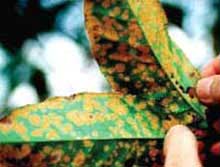
Knowledge points of coffee cultivation: factors affecting coffee tree growth and coffee bean quality leaf rust
Image: the shift of google from traditional shading to sun exposure may be the main cause of large outbreaks of coffee leaf rust on coffee farms in Central America and Mexico. Coffee leaf rust was discovered in Central America as early as 40 years ago, but recent outbreaks in Central America (Colombia, Costa Rica, El Salvador, Guatemala, Nicaragua) and Mexico are by far the most

Matters needing attention in planting coffee trees what is the introduction of Indonesian coffee
Note: (1) Coffee is a tree, so during the growing period, the following leaves will gradually become old and yellowed, which is a normal phenomenon of plant growth, do not panic, pay attention to timely cleaning of old leaves and yellow leaves; (2) it takes three years for coffee to blossom. The flower has a jasmine-like aroma, which is lighter than jasmine, and has the bitter taste of coffee after taste. The flowering period is from February to May and blossoms continuously. Post-anthesis knot